





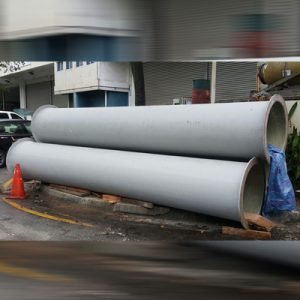
FRP, or Fiber-Reinforced Plastic, pipes have become a staple in many industries due to their remarkable properties. These pipes are composed of a combination of synthetic resin and strong reinforcing fibers, such as glass or carbon. This blend creates a product that is not only cost-effective but also highly resilient.
The Advantages of FRP Pipes
FRP pipes offer a plethora of advantages that make them a top choice for various applications:
1. Corrosion Resistance
FRP pipes are impervious to corrosion, making them ideal for transporting corrosive substances.
2. Lightweight
Compared to traditional materials like steel, FRP pipes are remarkably lightweight, making them easier to transport and install.
3. Longevity
These pipes have a significantly longer lifespan than many other materials, reducing maintenance costs.
4. High Strength
Despite their lightweight nature, FRP pipes exhibit high strength, ensuring structural integrity.
5. Low Maintenance
FRP pipes require minimal maintenance, saving both time and money.
Applications of FRP Pipes
FRP pipes find applications in various industries:
6. Chemical Industry
FRP pipes are extensively used for transporting various chemicals due to their corrosion-resistant properties.
7. Oil and Gas
In the oil and gas sector, FRP pipes are favored for their resistance to the corrosive effects of hydrocarbons.
8. Water and Wastewater
Municipalities rely on FRP pipes for water and wastewater systems because of their durability and resistance to chemicals.
9. Infrastructure
FRP pipes are used in infrastructure projects, including bridges, due to their lightweight yet robust nature.
10. Marine Industry
In the marine industry, these pipes are a preferred choice due to their resistance to saltwater corrosion.
FRP Pipes in Construction
11. Building Construction
FRP pipes are used for plumbing systems in buildings, ensuring a long-lasting and leak-free solution.
12. Environmental Benefits
Their longevity and low maintenance contribute to reducing construction waste and environmental impact.
FAQs About FRP Pipes
Are FRP pipes suitable for high-pressure applications?
Yes, FRP pipes can withstand high-pressure conditions, making them suitable for a wide range of applications.
How do FRP pipes compare to traditional materials like steel?
FRP pipes outperform steel in terms of corrosion resistance, longevity, and weight.
Can FRP pipes be customized for specific requirements?
Absolutely, FRP pipes can be tailored to meet specific project needs.
What is the installation process for FRP pipes?
The installation process is straightforward, and many contractors are experienced in working with FRP pipes.
Do FRP pipes require special maintenance?
No, FRP pipes are low-maintenance, requiring only occasional inspections.
Are FRP pipes cost-effective in the long run?
Despite a slightly higher upfront cost, FRP pipes prove to be cost-effective due to their extended lifespan and reduced maintenance.
Conclusion
In the world of modern construction and infrastructure, FRP pipes stand out as a reliable and cost-effective choice. Their resistance to corrosion, lightweight nature, and versatility make them a popular option across various industries. As you embark on your next project, consider the many advantages of FRP pipes.